

Why Simplicity Is Harder Than It Looks
Many van conversions aim to impress with their features.
No more batteries. No more storage compartments. No more visible technology.
These items may be useful, but they don’t necessarily make a space more pleasant to live in. On the contrary, the accumulation of visible objects often has the opposite effect: visual clutter and interiors that feel overwhelming rather than relaxing.
At Rocksalt, we take a different approach to design. Rather than asking ourselves what we can add, we think about what we can take away.
Designing a serene interior isn’t about pursuing superficial minimalism. It’s about structuring a space in which every element serves a purpose—both visual and functional. Paradoxically, achieving this simplicity often requires more thought and effort.
A Scandinavian influence
Our interior designs are partly inspired by Scandinavian design: bright, balanced spaces where simplicity and the quality of materials take precedence over an overabundance of decorative elements.
Rather than using a wide variety of finishes, we work with a limited, cohesive palette of materials. This allows the interior to be perceived as a unified whole rather than a series of individual elements.
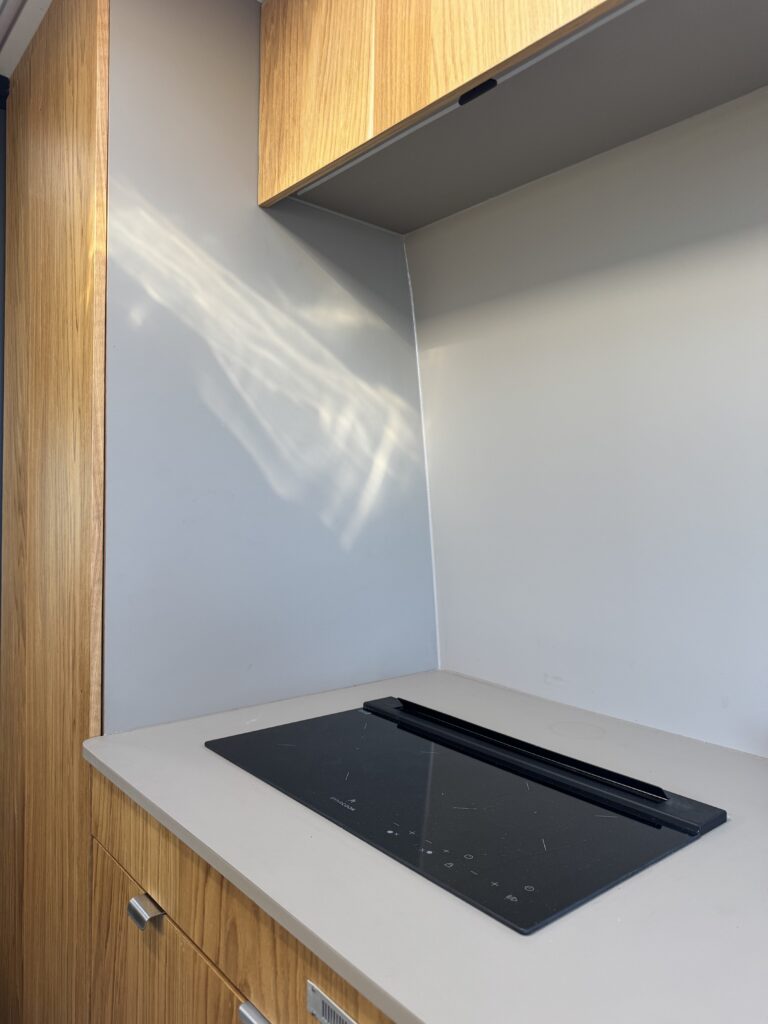
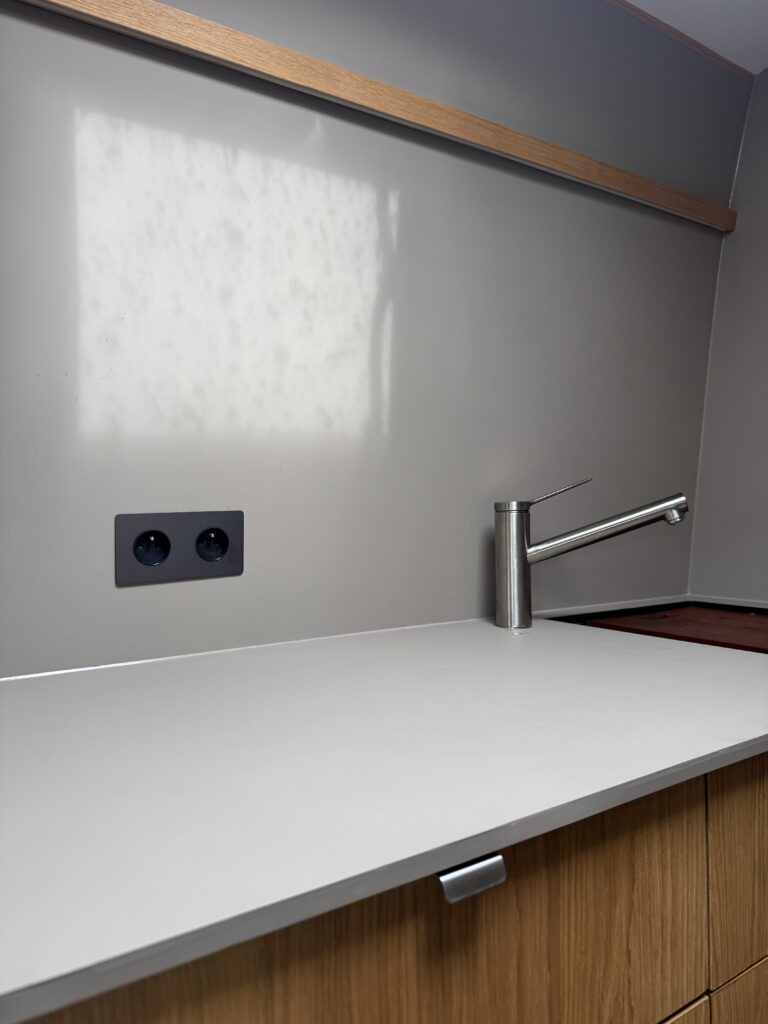
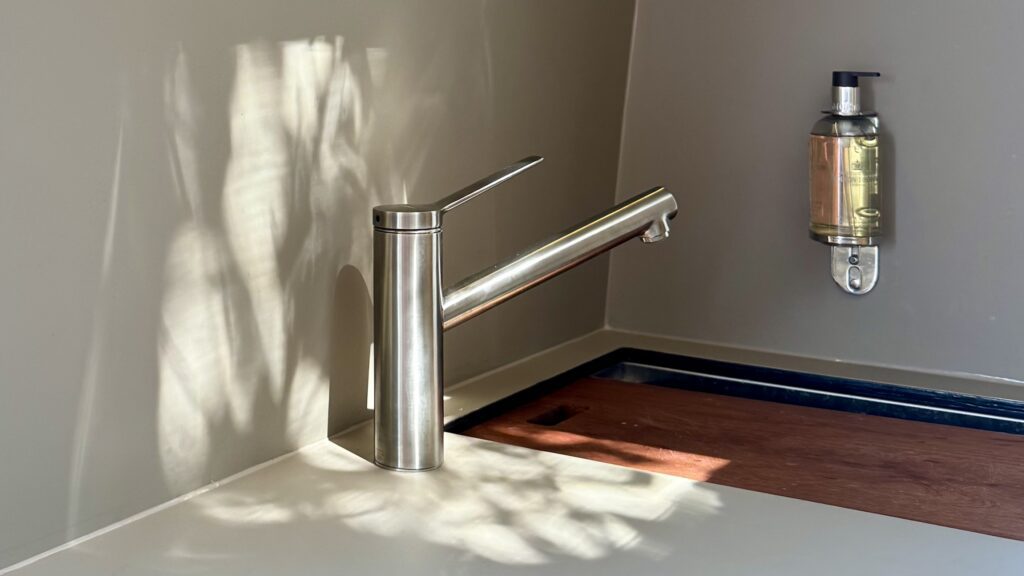
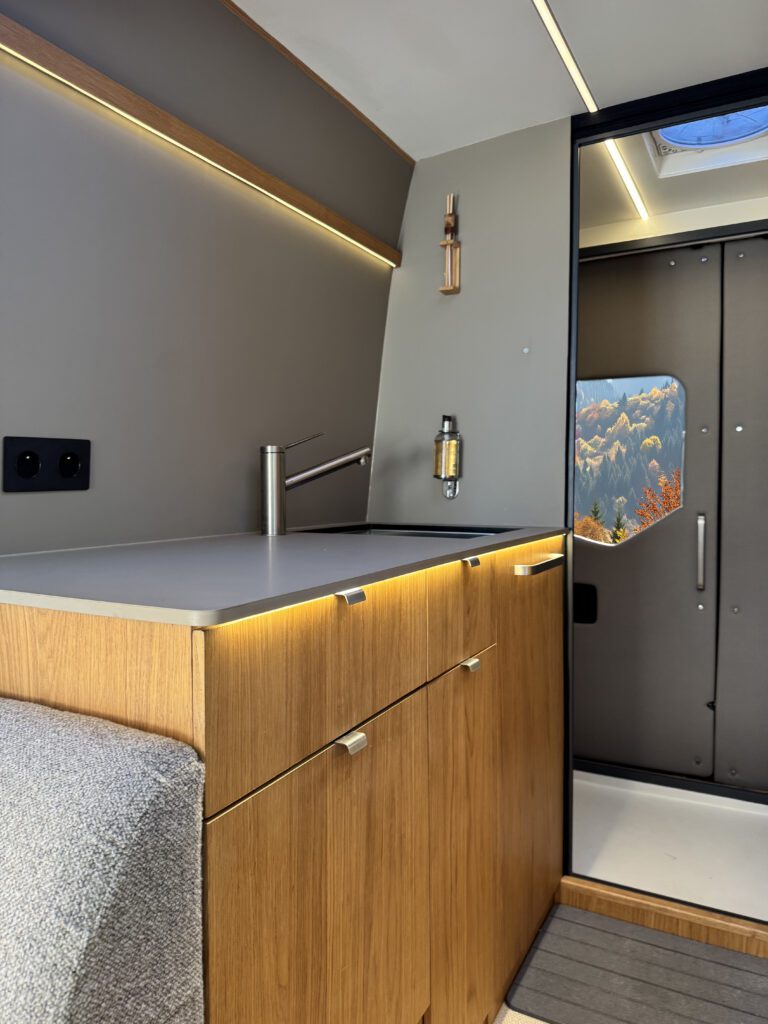
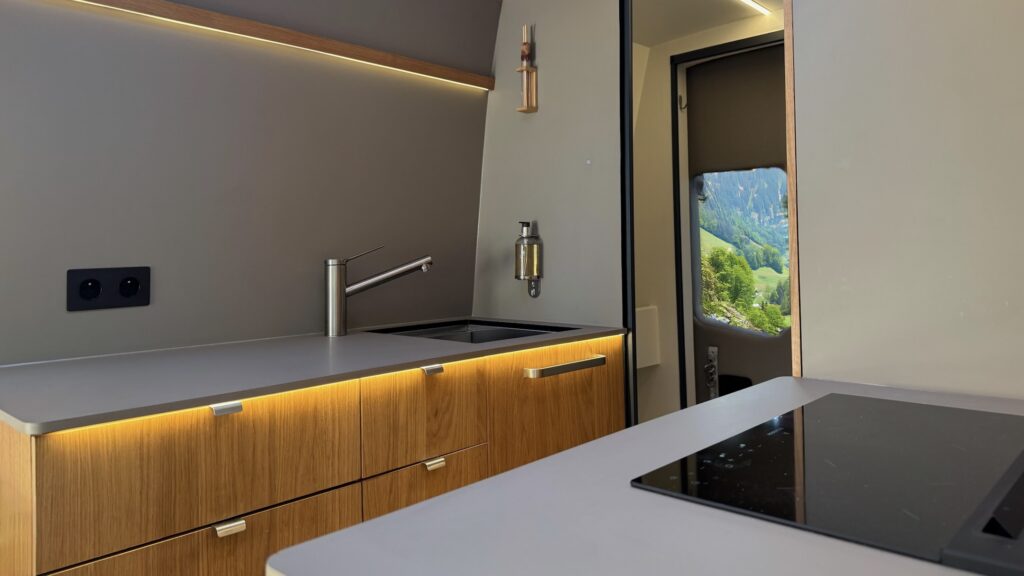
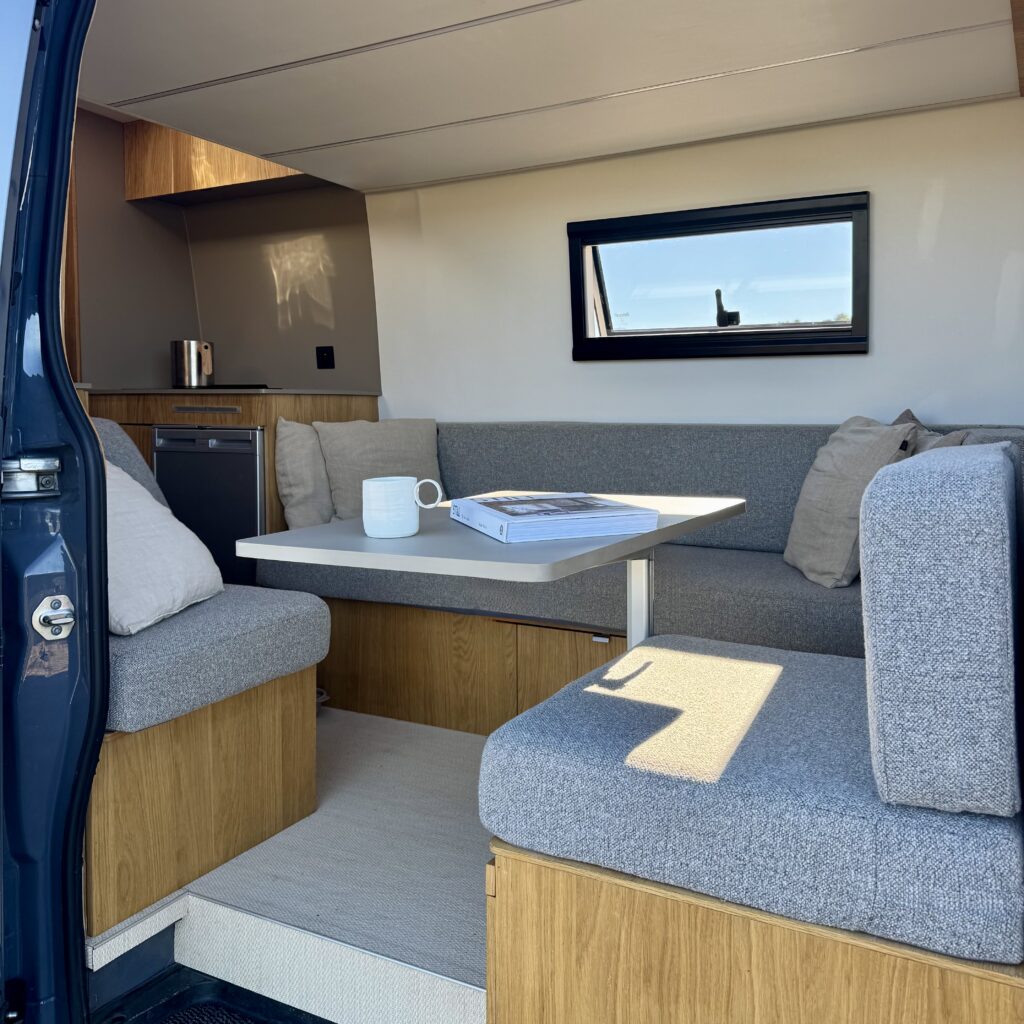
In our showroom van, for example, the combination of Fenix surfaces, solid oak doors, Bolon flooring, and Designers Guild fabrics creates a understated palette where the texture and quality of the materials set the tone.
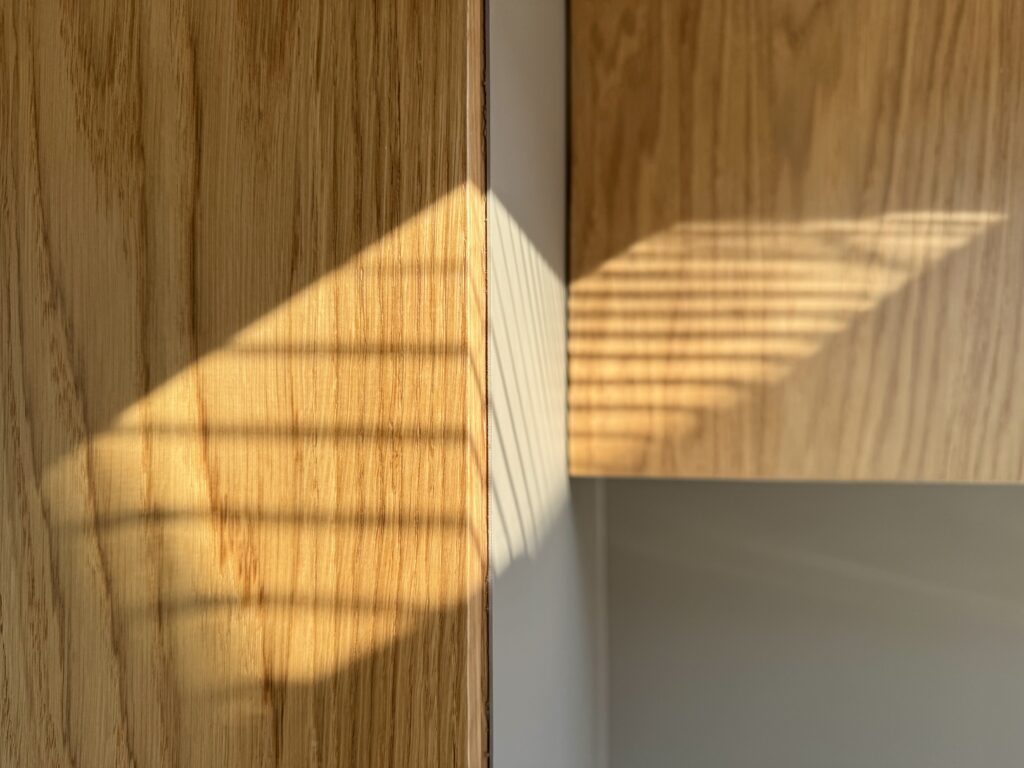
Oak was chosen for this project because it complements the warm tone of Fenix Castoro Ottawa naturally. But this isn’t a standard choice. We also work with other wood species or combinations of materials depending on the look we’re aiming for in each project.
What matters most is not the material itself, but the consistency with which it is used.
Light and Surfaces
Light has a strong influence on how we perceive a space.
In a compact interior like that of a van, highly reflective materials can quickly create glare and create a sense of visual clutter.
That is why we prefer surfaces that absorb light rather than reflect it.
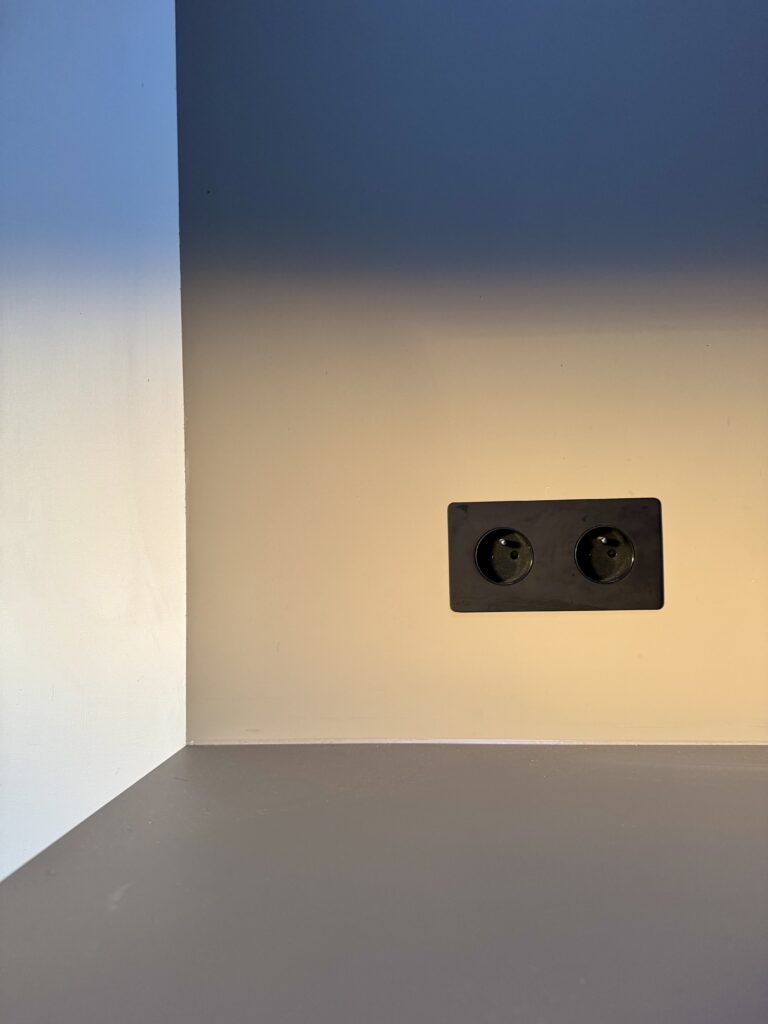
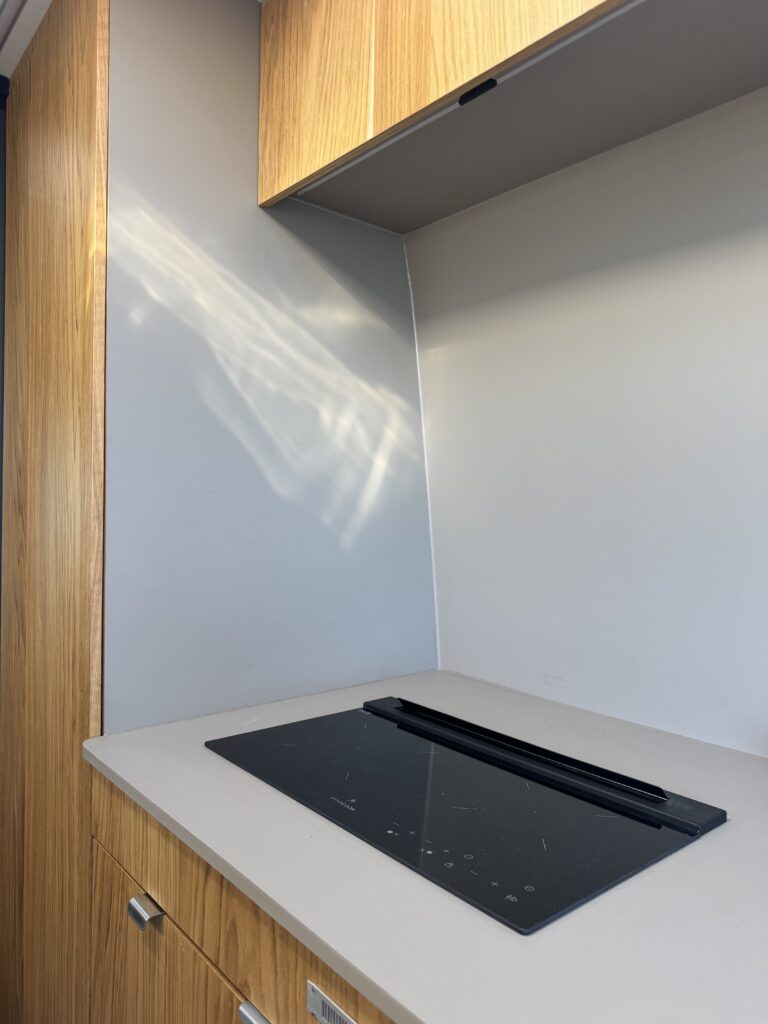
The Fenix, with its extremely matte finish, diffuses light gently. The surfaces remain understated and do not draw unnecessary attention.
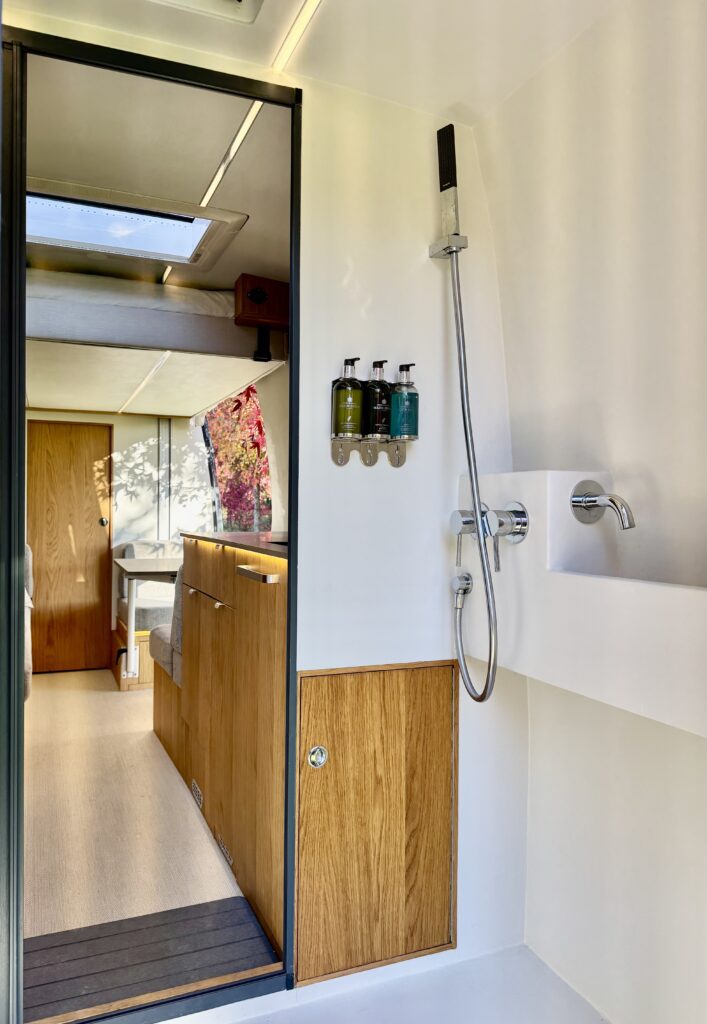
The vehicle’s shape itself also plays a role. In a Mercedes Sprinter, for example, the slightly curved walls allow for smoother transitions between surfaces. When these curves are incorporated into the interior design, light flows more naturally throughout the space.
The result is subtle, but it contributes greatly to the overall atmosphere.
Storage without visual clutter
A van should be practical for everyday use. But practicality shouldn't mean a cluttered interior.
In many homes, coats, shoes, and everyday items end up being visible all the time.
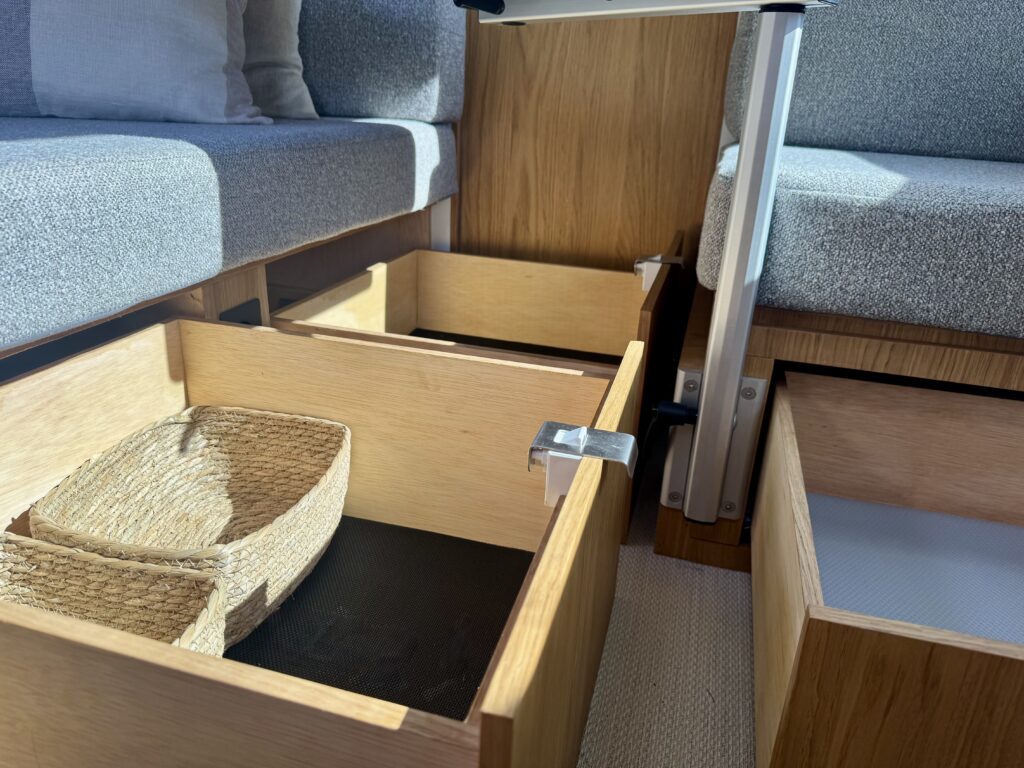
In our projects, these elements always have a specific place, but they remain unobtrusive.
For example, coat hooks are placed near the rear doors, where they’re handy when you get into the van, but they’re built into the cabinetry rather than mounted on the walls. There are dedicated drawers for shoes near the entrance so they can be put away right away.
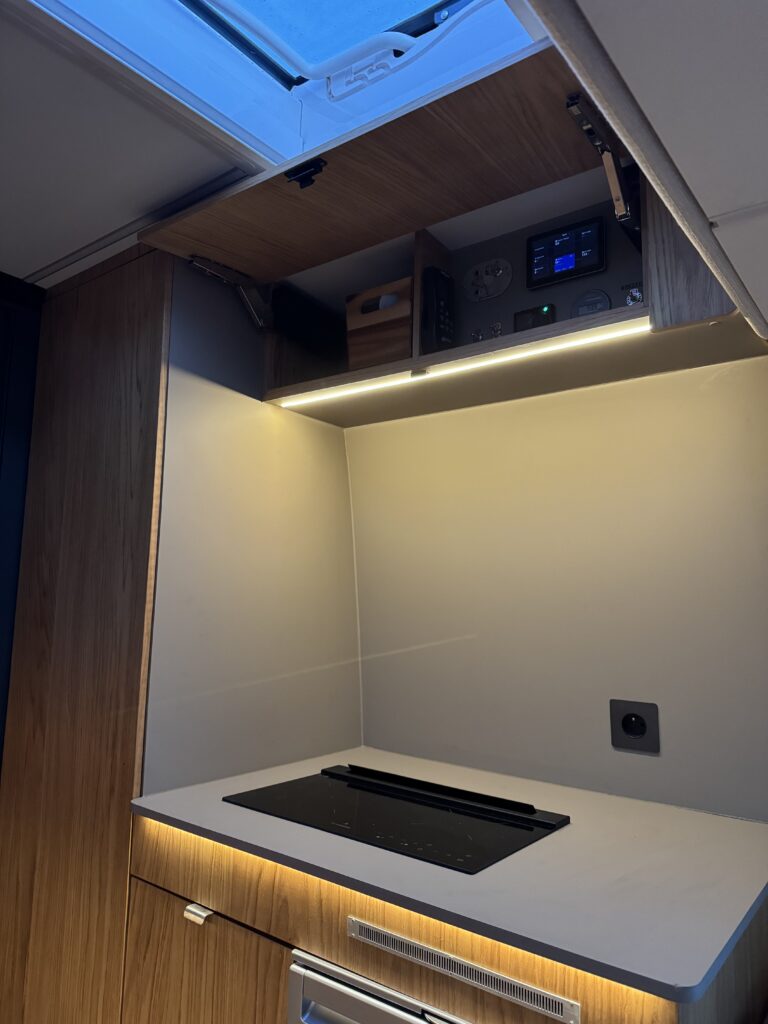
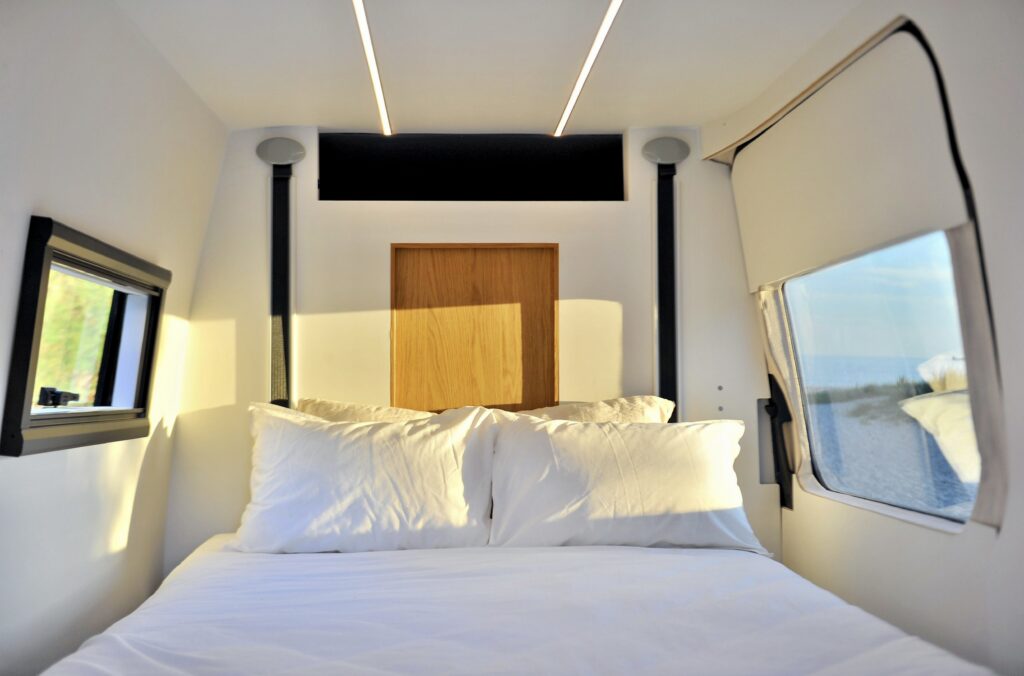
The same principle applies to the technical components. Electrical systems and controls are integrated into the furniture. There are no visible screens in the center of the interior, nor are there any indicator lights that catch the eye.
When the cabinets are closed, no screens or buttons disrupt the atmosphere—even at night.
Restraint in the choice of materials
Simplicity also involves restraint in the choice of materials.
In many interiors, the use of different finishes is common to create variety. In a small space, however, this often has the opposite effect: the interior appears fragmented.
We prefer to work with a limited number of materials, but to use them in a cohesive way.
Fenix features durable, ultra-matte surfaces. Wood adds a natural warmth. Textiles soften the space. Flooring such as Bolon offers durability and visual simplicity.
Together, these materials create a balanced interior where nothing stands out unnecessarily.
A space that accompanies the journey
A van isn't just a means of transportation. It's also a place to live.
Sometimes for a few days, sometimes for several weeks. Quiet mornings, rainy days, or peaceful evenings spent just sitting still are all part of the experience.
At times like these, the atmosphere inside becomes more important than the list of amenities.
A quiet space allows you to relax, focus on the journey, and enjoy your time on board.
Simplicity as a Discipline
Simplicity is often perceived as the absence of design.
In reality, it is the result of a series of specific decisions: limiting the materials, aligning the surfaces, incorporating storage, and concealing technical elements that do not need to be visible.
Every element must find its place.
The result may seem obvious, but it is the product of careful design.
The Rocksalt Approach
At Rocksalt, we design vans as living spaces, not as a collection of equipment.
By skillfully working with materials, light, storage solutions, and technical integration, we strive to create interiors that are sustainable, balanced, and enjoyable to live in over time.
In design, quality doesn't always come from what you add.
Often, it stems from what we choose to leave out.